• Skip to primary navigation
  • Skip to main content
  • Skip to primary sidebar

Terraformers

Movements Towards a Pristine Planet

  • Home
  • Permaculture
  • Blog

Blog

The Movements Under the Umbrella of Earth Terraforming

Filed Under: Blog

Our species has terraformed this planet for millenia. From the initial crops our ancestors planted to the first creeks we redirected or dammed, we have been changing our environment to suit us.

As our technology has grown in recent centuries, we have inherited a long period of industrial driven planetary destruction. But there are many reasons for optimism instead of despair and apathy.

In recent decades movements have been popping up with a focus on the restoration of the planet while growing more healthy and inexpensive food.

In my view, terraforming the Earth in a positive direction and returning the environment to a pristine state is our destiny. It is well under way with large land restoration projects in China, Africa, India, and other areas. People are also practicing this on small chunks of property in growing numbers.

These movements are also accelerating with new technologies. AI is able to help us plan and condense a huge amount of environmental data. Heavy machines, drones and robotics are helping us with seed planting and shaping the land to better manage water and build soil.

This article will quickly explain what these positive terraforming movements are and how they fit into the trajectory of our species healing our world. I guess I should name them: permaculture, regenerative agriculture, agroforestry, and re-greening of deserts.

Permaculture

Permaculture follows nature to grow food and teaches us many principles for partnering with the ecosystem and each other. I feel permaculture should be the base education for every terraformer.

Water management and efficiency of work is key in permaculture. We build earthworks such as swales and terraces to hold water in the land and hydrate it. We research the correct plants to use for their properties of improving the soil, creating mulch, and being valuable for food or other uses. We let the plants and biodiversity do the bulk of the work.

Land Restoration

Restoring barren land on large scales has been happening for decades, mainly in China, India and parts of Africa. Ecosystems that have been degraded from overgrazing, destructive farming practices and drought have been brought back to life.

As a result, vegetation and animals come back. Dead creeks start flowing again. Dust storms, erosion and mud flows stop being a problem.

Often in these projects, hundreds of workers build swales and terraces to hold rain water in the land and let it soak in. Trees, shrubs and crops are planted. This forms new, healthy soil and prevents further erosion. Of course, tractors greatly improve the speed of these land restoration projects.

Regenerative Agriculture

Industrial agriculture relies on destructive practices such as planting single types of crops (monoculture), plowing and dousing the food with pesticides and fertilizers. The goal over the past century has been to turn land into a mechanized profit machine. What it has accomplished is the destruction of life in the soil.

This is also a failing model as fertilizer prices rise and single crops easily get wiped out by a single bug or disease. In the future, we will ridicule these practices as moronic.

Regenerative agriculture covers a wide range of techniques from no-till to planting many crops, cover cropping, and rotational animal grazing. Decades of lessons have shown that when we focus on soil health and copying nature, healthier food can be grown for less money up front.

Agroforestry

Agroforestry incorporates trees and shrubs into food growing and animal systems. The trees are selected for many reasons. They can be windbreaks, bring beneficial predators, create shades, be buffers from wild areas, and provide forage or mulch.

Many crops can be integrated into these systems. Biodiversity is enhanced. Water management is improved, carbon is sequestered, and the soil improves in agroforestry.

Regreening Deserts

Giant efforts are underway to turn back the encroachment of deserts. Drifting sand dunes are stopped by making grids of dead plant matter or sand bags. When the sand becomes stabilized, bushes and trees can be planted which further settles the ground.

Different techniques are used in desert with compacted, hard ground. Swales and small water holding pits can be dug where trees and other plants can grow. Desert creeks are dammed, so the water doesn’t run off in the rare storms.

Projects such as The Great Green Wall across Africa and the Loess Plateau in China are examples where former desert is being transformed into lush green landscapes. This is the epitome of Earth terraforming, in my opinion.

Small projects are beginning in the US based on desert permaculture too. Buying inexpensive desert land and “flipping it” into a food producing oasis might be a strong business model in the future.

Technology will Boost these Efforts

The near future will see these Earth terraforming projects greatly expanded using new technologies. AI and robotics will multiply our efforts greatly.

AI will help with planning and choosing the ways forward. They help by taking in many data points and suggesting the right plants, trees, and designs.

Automation in the form of robotics will greatly expand our speed at creating swales, dams, and reshaping property. Drones are already being used to sow seeds. Each of these technologies will keep expanding.

All of these efforts I consider to be under the label of “terraforming”. As mundane human labor is increasingly replaced by AI and robotics in the near future, this is a chance for us to shift our focus to healing our planet.

Working towards regenerating and healing our ecosystem has many benefits for the individual. It is highly rewarding, gives us healthier and less costly food, and brings people together.

Terraforming Earth will give us back our connection to our homeworld and each other that modern civilization temporarily took from us the past couple of centuries.
Tips for Getting Started in Permaculture

Filed Under: Blog

Lessons and principles from permaculture are the basis for terraforming and regenerating of our planet. I wanted to share time saving tips for those of you starting down the permaculture path.

Start by Looking at your Situation

It’s important to get a vision of what you want to accomplish from the beginning. Stepping back and applying radical honesty to your permaculture efforts will save you insane amounts of time and frustrations. Ask yourself these following questions:

  • What are your goals?
  • What do you want to build?
  • What size of land, plot, or deck are you working with?
  • What growing zone and climate are you in?
  • How much rain and snow do you get?
  • What does the wind and sun do throughout the year?
  • What varmints and animals are around your land?
  • What are your resources in money and materials?
  • What is your level of skill and experience?

Study the Type of Permaculture Relevant to you

Based on your answers to the prior questions, start looking up the lessons that match your situation. Youtube is the best place to start. From there, general and specialized permaculture books will give you a deeper dive.

It doesn’t make sense to study something that is not relevant to your situation when starting out. Look up the topics that apply to you such as: backyard permaculture, small scale, large scale, selling food, desert permaculture, raised beds, agroforestry, cold weather, greenhouses, etc.

For my own personal example, I battle armies of gophers so I have to build raised beds on top of stones to be 100% sure those furry bastards don’t get in. I also feed some outdoor cats around my garden so they hang out there and hunt them.

Your early focuses should be on improving the soil, learning to manage water, protection from the wind and studying the sun’s path.

While learning, start to draw out a plan for your property. Study the zones of permaculture to get an idea of how to be efficient.

The best way to build is to learn a bit then decide what action makes the most sense for you. Build or plant on a small scale to see how it goes. Adjust from there and pick another project.

Start with Small, Easy Wins

When you are starting out in permaculture, aim for quick wins to grow some confidence and momentum. Sure, gigantic swales and ponds are awesome, but is that realistic right from the beginning of your journey?

Inexpensive and simple wins could be: growing some easy salads, recycling materials into raised beds or containers, chopping and dropping and area to improve the soil and water retention, planting cover crops that are nitrogen fixers, creating a simple water catching system.

When getting into this new way of growing food and managing the land, planning is vital. Draw and write out your goals and plans, then go for the easiest projects first. Burnout and overwhelm are common when you dive right into something gigantic.

Prioritize the Order of your Projects

Again, learn about permaculture planning and design practices. There is a sequence of things that should be done. You don’t want to make double work for yourself or have to remove something that you built out of order.

An example I see all the time is rushing to plant fruit trees immediately since they take years to produce. Before that, there should be planning and drawing out your plan.

A diversity of different plants and fruit trees should be planned to support each other. You need to think about water flow and earthworks first. You probably want swales or terraces to accomplish this.

Another thing that can foul you up is putting your garden patch in the wrong place. Maybe you didn’t observe the sun and it gets too much shade or that area gets too much wind. Maybe that spot is a better place for some bushes and trees to act as a wind break. Always observe and plan for a couple of weeks before executing large projects.

Keep writing and drawing out your plans. Edit them constantly as you learn more about your property. What goes best where? Why is that? What earthworks do you need before you go planting? Where is the water running during rains? How does the sun and the wind behave? Plan, observe, act, plan, observe, act!

Keep Learning Along your Permaculture Journey

Permaculture is not something you learn in one week and then you are good. It is a constant back and forth where you are learning from your actions. Youtube, blogs, and books are your best teachers (if there are not other Permies around you).

I’ll make the vital point again: study from those with similar climates, goals, and properties. If you are in tropical conditions, desert, urban, etc. seek out those types of Youtube channels and websites.

AI is a Great Tool

I use the free version of Claude for planning and learning too. I make a project (on the left panel). I give it my goals, climate, size of plot that I am working with, and start asking it detailed questions.

You can ask it to “respond as a permaculture expert” or whatever your situation might be. Play around with AI, but double check the answers you get. You might be surprised.

So those are my broad tips for saving time and being efficient early in your permaculture journey. Start small, plan, and work smart. You will be amazed at the results from a few well planned projects. Study all the angles before large projects and you will be productive soon.

The Drone Industry Boom: Your Chance to Get In

Filed Under: Blog

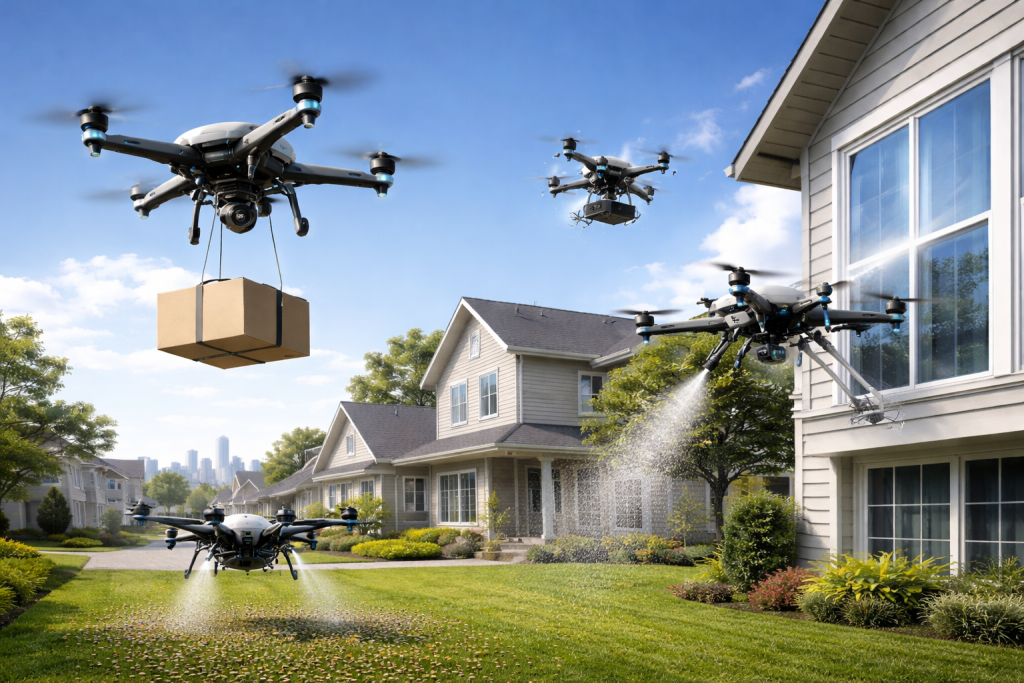
Drone technology has made giant leaps forward in recent years, mainly driven by war, especially in Ukraine. But, this tech is growing in positive directions as well. Drones are being used for a wide array of uses such as: land survey, deliveries, video recording, and spreading seeds in agriculture, to name a few.

The drone industry is certain to continue expanding in the coming years and decades. This will present huge opportunities for you to either create or work for a drone business.

I hope this post inspires you and gives you new ideas about getting into this field. History has shown that new tech can breed hundreds of thousands of new jobs and thousands of new companies.

General Drone Businesses

Think about all the branches that make up the auto industry. Drones will be needing their own services and parts, too. Maybe you could get into batteries, electronics, drone design, sensors, cameras, etc.

Drone Manufacturing Plants

Demand for drones will grow! Small plants or assembly lines with people and robotic automation is a path you could take. If you have experience with building things in bulk, drones are a great business to research.

Repair Shops

Drones also need to be repaired, which is a growing business model. You can become a drone mechanic! Maybe you could have a mobile repair business so you wouldn’t need to rent a shop.

To go along with repairs, the creation of drone parts will be needed more and more. Many parts can be 3D printed, which could be a great business on its own.

Specific Use Cases

You can also focus on building a business within one specific drone use. It can be a use where you have experience or an interest. Yeah, there are the war uses, but here is a list of more peaceful ones that exist right now.

Scouting and Mapping of Land

Drones can be used in land surveys and searching remote areas.

Search and Rescue

Since swarms of drones are being used to track soldiers in war, they can be applied to missing people, even over areas of the ocean. Instead of dropping grenades and bombs, they can provide water and food to someone that is lost!

Spreading seeds and Planting Trees

Drones are alrady being used to spread cover crop seeds on farms. Large drones are even shooting trees seeds into the soil. The concept is proven and growing.

Taking Videos

If you like shooting videos, get into the drone video game. Sports such as surfing, skiing, snowboarding, skateboarding, motorcycles, and countless others love to get captured by drone vid.

The Intersection of AI and Drones

A massively impactful combination in the near future will be artificial intelligence and drones (AI with robotics, too). Drones are no longer toys that are souped up. Their uses are being expanded with onboard intelligence.

A specialized AI agent on a drone will be huge in the near future. There are countless possibilities such as: atomospheric studies, ecology sciences, ocean science, animal studies, and helping with forest fires, to name a few.

The only limit at this junction will be your own imagination. What is an interest that you have where a specialized agent in a robot or drone will have an impact?

Innovating and Inventing Drone Uses

Drone technology is so new that you can start your own industry within it! Being an innovator in a field is a way to put a dent in the world.

Some ideas: firefighting, seed spreading, cleaning buildings, transport / flying cars, delivery. Ask AI to help you brainstorm!

Fun with Drones: Sports and Customization

You could start drone competitions, maybe battles or a drone olympics! You could get into customizations with paint, new designs, batteries, sensors, onboard AI. It could be a thing…

Upgrade the Design, Improve the Tech

Drones are wide open for improvements to the underlying engineering, too. It’s another area that is needed and where you can make a name for yourself, as well as a lot of money. You don’t need to be an engineer. Just start studying drones!

Integrating and improving systems such as solar for longer flights, battery upgrades, camera integrations, various sensors, and parachutes for drones will be huge areas to research. Upgrading their rotor configurations, carrying capacity, and speed will also be a need.

You could even reinvent their design completely. I know there are efforts right now to mimic or even integrate biological systems. The future is getting weird.

The sky is the limit with drones. Yes, I love my terrible puns. It all starts with research if you are interested in this field. Maybe try to get a job where you can learn and innovate even faster.

Then, apply your imagination, write up your thoughts and plans, and ask AI for suggestions. The drone industry will continue to redefine our civilization in the coming decades. Please try to steer it in a positive direction!

  • Page 1
  • Page 2
  • Go to Next Page »

Primary Sidebar

Welcome, Terraformers!

I believe the movements of permaculture, land restoration, regenerative agriculture, recycling efforts, and regreening the deserts are all one impulse to positively regenerate and terraform the Earth. With AI, robotics and drones, we have new tools to multiply our efforts.

Turn your back on old, destructive ways and consider yourself a postive Terraformer from here on out.

Shifting your focus to healing the planet immediately brings you purpose and community.

Copyright © 2026 Terraformers.org | Privacy Policy